


Mystery Dumpling: Squishy Box
0.00.00 Reviews
App Specs
- Version
- 0.7
- Updated On
- License
- Free
- Downloads
- 50,000+
- Developer
- Brocker Bus Studio
- Categories
- Casual
- Platform
- Android
Screenshots

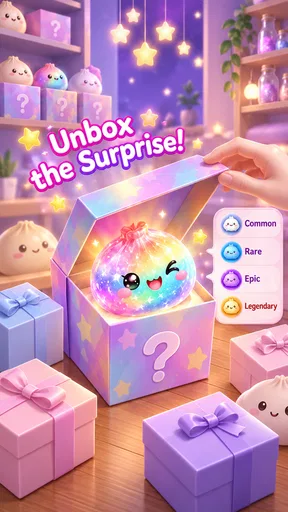
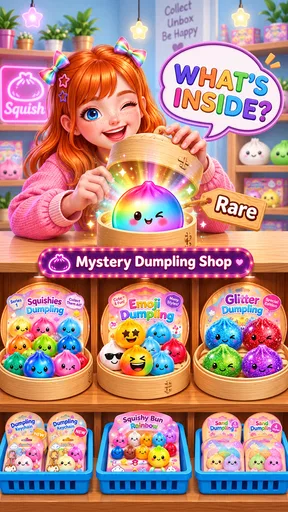



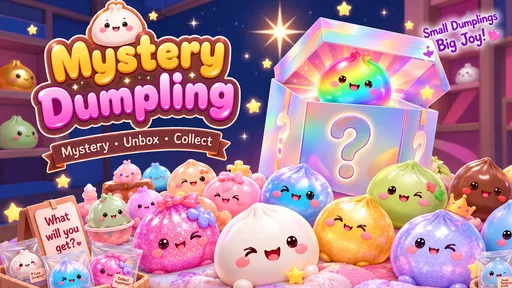
 Analysis by AppCompare
The appeal of Mystery Dumpling: Squishy Box is easy to understand: it turns opening a box into a small collecting ritual, with cute dumplings and the possibility of finding something less common. I spent time with it as a light casual game rather than treating it like a deep puzzle or action title, and that distinction matters. Its main strength is the simple anticipation before each reveal, while its main weakness is that the same loop may feel thin if you want strategy, story, or a large amount of interaction.
Developed by Brocker Bus Studio, the game is free and aimed at Everyone. It belongs to the casual side of mobile gaming, so it fits naturally into short breaks, quiet evenings, or those moments when I want something pleasant without learning a complicated control scheme. The store summary focuses on opening mystery boxes, collecting squishy dumplings, and discovering rare surprises. In practice, that promise is best understood as a compact collecting experience built around curiosity rather than competition.
The Android listing shows over 50 thousand installs, which gives the game a modest but real audience. It was released on August 25, 2026, and the current version is 0.7, so I approached it as a young title that may still be finding its final shape. It runs on Android 8.0 or later. That broad compatibility makes it accessible to people using older devices, although the age of the phone can still affect how comfortable any touch-based session feels.
The mystery-box reveal is the entire point
The most important capability here is not movement, combat, or solving a board. It is the reveal itself. Each box creates a tiny question: what will appear, and will it be something I have already seen or a more unusual addition to my collection? That structure gives the game an immediate rhythm. I make a choice to open, watch the result, and then decide whether the new dumpling is worth appreciating as part of the growing set.
This works because the reward is both visual and organizational. A cute dumpling is enjoyable on its own, but the collection gives the result a second purpose. A familiar item can still feel useful because it contributes to a sense of progress, while a rarer surprise provides the memorable moment. The real hook is anticipation, not complexity. If you enjoy the feeling of completing a themed set, the game has a clear reason to keep returning.
That focus also tells me what not to expect. This is not the kind of casual game I would choose when I want a demanding challenge, a long narrative, or a skill-based test. The box-opening idea is deliberately narrow. Its success depends on whether the visual charm and collecting loop are enough to hold your attention after the first few discoveries.
Why the reveal feels better than a plain checklist
A normal checklist gives me information immediately: item one is complete, item two is missing, and so on. A mystery box delays that information, which creates a little emotional lift before the result appears. That delay is the reason the game can feel more engaging than simply browsing a catalogue of dumplings. The action is small, but the timing gives each opening a beginning, middle, and end.
Worth Reading Before You Choose

EA SPORTS FC Mobile 26 Is a Bigger Football Game, but It Takes Time

Flipboard Shows What News Apps Must Do Beyond the Feed

Switching to Android Auto Means Rethinking Your Driving Routine

Google Calendar Makes a Crowded Week Easier to Manage

Ludo King Makes the Most of the Minutes Between Plans

Baby Panda World Brings Quick Play to Modern Phones, but Its Game Library Feels Busy
I also like that the concept is easy to explain to another person. Someone can watch a single opening and understand the attraction without needing a tutorial about complicated rules. That makes it suitable for sharing a quick moment with a child or a friend, especially because the Everyone rating matches the gentle, approachable presentation suggested by the concept.
Still, the same simplicity can work against it. Once I understood that the box reveal was the central activity, I knew exactly what kind of session I was getting. There is no reason to expect the game to suddenly become a puzzle adventure halfway through. Players who need several distinct systems to stay interested may find the experience repetitive sooner than collectors do.
How I would use it in practice
In everyday use, I would treat this as a short-session game. I might open it while waiting for an appointment, after finishing a small household task, or when I have a few quiet minutes before bed. It does not ask me to remember a complicated plot or rebuild a strategy after a long absence. I can return with the simple goal of seeing what the next box contains and checking how the collection is developing.
A useful habit is to pause after each reveal instead of rushing through every available opening. Looking at the new dumpling and mentally separating “new to me” from “already familiar” makes the collection feel more meaningful. If I tap through everything as quickly as possible, the surprise becomes a blur. The game benefits from a slower rhythm, even though the individual interaction is simple.
Another practical approach is to use the collection as a reason to stop. Rather than deciding in advance to play for a long stretch, I can set a small personal endpoint: one opening, one new discovery, or a brief check of what I have gathered. This is especially helpful for a game built around repeated rewards. The short target preserves the pleasant anticipation and reduces the chance that the loop starts feeling like work.
A realistic break-time scenario
Imagine I am on a train with ten minutes to spare and do not want to begin a game that demands full attention. I can open Mystery Dumpling: Squishy Box, make a few discoveries, and put it away when I reach my stop. If the reveal is satisfying, the session feels complete even without a conventional level or mission. If the result is familiar, I have still spent a few minutes with a soft, playful theme rather than a stressful challenge.
The same pattern suits a parent looking for a simple game to show a child. The controls and objective are easier to explain than those of a platformer or strategy game, and the collecting theme provides an obvious conversation point. I would still play alongside the child rather than assuming the game alone will provide endless entertainment. The appeal is strongest when the reveal becomes a shared moment.
For a more focused collecting session, I would keep track of which dumplings have already appeared in my own notes or memory and use each return to look for something different. I would not expect that method to add an official feature; it is simply a way to give the compact loop a little more structure. This is one of the trade-offs of the design: the player may need to create personal goals when the built-in activity is intentionally straightforward.
What the simple design gives up
The clearest limitation is repetition. Opening boxes is appealing because the first discoveries carry genuine curiosity, but repeated reveals can lose impact when the action does not change much. The game is therefore more likely to satisfy someone who enjoys collecting small variations than someone who needs constant mechanical novelty.
There is also a difference between rarity and depth. A rare surprise can make one opening feel special, but it does not automatically create a deeper game. If your preferred casual titles are match-three games with planning, word games with a measurable challenge, or idle games with layered upgrades, this experience may seem lightweight by comparison. Those alternatives give you more decisions to make; this one gives you a more focused moment of expectation.
The free price lowers the barrier to trying it, which is helpful for a game that depends so heavily on personal taste. I can test the central loop without committing money first. At the same time, free access does not guarantee that the collecting idea will remain engaging for everyone. I would make the decision based on whether cute discoveries are enough of a reward, not simply because the download costs nothing.
The current version, 0.7, is another reason I would keep expectations measured. A version number at this stage suggests a title that is still relatively early in its development. I would be comfortable trying it for the core experience, but I would not judge it by the standards of a large, fully expanded collection game. Its present appeal is the focused box-opening loop, not the promise of a huge catalogue of systems.
When another casual game is a better choice
I would choose a puzzle game instead when I want each move to test my planning. I would choose an idle game when I want progress that continues to build through upgrades and long-term optimization. I would choose a traditional collection game when I want battles, missions, or a stronger reason to use each item. Mystery Dumpling: Squishy Box is better when I want the collection feeling without those extra layers.
It is also not my first recommendation for someone who dislikes randomized reveals. The uncertainty is the feature, but it can also be the source of frustration. If I prefer direct control over exactly which item I unlock, a catalogue or crafting game would feel more satisfying. Here, the pleasure comes from not knowing the result in advance, so players who find that structure irritating should skip it.
Another trade-off is attention. The game is easy to pick up, but the same accessibility means it may not occupy me for a long, uninterrupted evening. I would not download it expecting a single title to replace every other casual game on my phone. It works better as a small companion: something I can open between more demanding activities.
Who gets the most from the dumpling collection
The best audience is someone who enjoys cute visual themes, compact sessions, and the satisfaction of gradually seeing a collection grow. It suits players who like opening digital packs for the reveal but do not necessarily need a competitive ranking or a complex objective. It can also work well for families looking for a gentle game that is simple to demonstrate and easy to revisit.
Collectors may get more value by turning each session into a deliberate routine. I would open a box, inspect the result, and then stop or continue based on whether I still feel curious rather than automatically repeating the action. That small pause matters. It keeps the game from becoming background tapping and makes the individual dumplings feel like discoveries instead of disposable results.
People using older Android phones may appreciate that the minimum operating-system requirement is Android 8.0. I would still leave enough storage and battery for comfortable use, as with any mobile game, but the stated compatibility does not limit the title to only the newest devices. The Everyone rating also makes it a more approachable choice for mixed-age households, although individual preferences about mystery-based rewards still matter.
I would skip it if my priority is a substantial campaign, a strategic challenge, or a large number of activities. I would also skip it if I quickly lose interest in repeated collecting. The game does not need to apologize for being small and focused, but that focus means the right player matters more than broad appeal.
My practical recommendation
I recommend trying it when you want a calm, uncomplicated collecting game and the idea of a surprise dumpling sounds genuinely fun. Start with short sessions and judge the experience by how much you enjoy the reveal itself, not by expecting a deeper game to appear later. If the first discoveries make you smile and the collection gives you a reason to return, the compact design is doing its job.
If the first few openings already feel interchangeable, I would move on to a puzzle or collection game with more decisions. There is no benefit in forcing yourself through a loop whose central pleasure does not appeal to you. The free price makes experimentation easy, while the early version means it is sensible to view the game as a focused work in progress rather than a complete replacement for every other casual option.
My final impression is positive but specific: this is a charming box-opening game, not a broad all-purpose mobile adventure. Brocker Bus Studio has built its identity around the small thrill of discovering cute, squishy dumplings and adding them to a personal set. Choose it for the anticipation and the collection, not for strategic depth. For the right player, that narrow purpose is exactly what makes a few spare minutes feel pleasantly rewarding.
Pros
- Relaxing squishy interactions are easy to enjoy in short sessions.
- Cute dumpling designs give the game a charming visual identity.
- Simple controls make it accessible for younger players.
- Collecting different characters adds a light sense of progression.
- Works well as a casual
- low-pressure distraction.
Cons
- Gameplay may feel repetitive once the novelty of squishing fades.
- Limited challenge could disappoint players seeking deeper mechanics.
- Some content may require patience or in-app purchases to unlock.
- Small visual details can be difficult to appreciate on compact screens.
- Frequent effects or sounds may become distracting during longer sessions.
FAQs for Mystery Dumpling: Squishy Box
What is Mystery Dumpling: Squishy Box?
Mystery Dumpling: Squishy Box is a casual collection and opening game centered on adorable dumpling-themed characters and squishy surprises. Players open virtual boxes, discover random items, and build a colorful collection. Its simple controls, cute presentation, and short play sessions make it suitable for users who enjoy relaxing, low-pressure games with a strong element of surprise.
How do you play Mystery Dumpling: Squishy Box?
The main gameplay involves selecting or opening mystery boxes to reveal dumplings, accessories, characters, or other collectible items. Depending on the available activities, you may interact with the objects, organize your collection, and continue opening boxes to find new designs. The mechanics are easy to understand, so the game can be enjoyed without previous experience or complicated tutorials.
Is Mystery Dumpling: Squishy Box free to download and play?
The game can generally be downloaded at no initial cost, allowing players to try its core features before spending anything. However, free games may include optional purchases, advertisements, or rewards connected to progression. Before confirming a purchase, check the store listing and in-game payment information, especially if children may use the device or the account has saved payment details.
Does Mystery Dumpling: Squishy Box require an internet connection?
Some parts of Mystery Dumpling: Squishy Box may work without a constant connection, particularly basic interactions that have already loaded on the device. Nevertheless, internet access can be required for advertisements, updates, cloud-related features, events, or in-app purchases. Availability may also vary by device and version, so it is best to launch the game online at least once.
Is Mystery Dumpling: Squishy Box suitable for children?
Its cute art style, straightforward interaction, and non-competitive format may appeal to younger players, but parents should still review the store age rating and privacy information before installation. Randomized box-opening mechanics, advertisements, and optional purchases can be important considerations. Using parental controls and disabling unauthorized purchases is recommended when children play on a shared phone or tablet.


